What Is the Connection Between Anion Gap and Bicarbonate?
What Is the Anion Gap?
The anion gap is a derived measure that assists in interpreting the balance of electrolytes in the blood. It is usually obtained from common lab values on an electrolyte panel, especially sodium, chloride, and bicarbonate. In simple terms, the anion gap is a way to estimate whether there are excess acid in the bloodstream that are not directly measured on routine serum chemistry testing.
The logic behind the calculation is based on electroneutrality, the idea that blood has to maintain a balance between positively charged ions and negatively charged ions. Because not every ion is measured, the anion gap acts as a useful diagnostic clue that can suggest hidden acids, or unmeasured anions, in the body.
In most routine calculations, sodium is compared with chloride and bicarbonate. When the gap is elevated than expected, it can suggest that acids have accumulated. When the value is normal, it may suggest that bicarbonate has been lost without a buildup of unmeasured acids. That difference is central to anion gap calculation and clinical interpretation.
Although the formula may vary slightly between labs, the overall purpose remains the same: to help clinicians recognize patterns of acid-base status and identify possible causes of metabolic derangement.
What Is Bicarbonate and Why Is It Important?
Bicarbonate is a central component of the body’s buffer system. It helps shield blood pH from changing too much when acids are produced or introduced into the body. In routine testing, bicarbonate is often reported as serum bicarbonate or total CO2, and it has a major role in evaluating acid-base balance.
When bicarbonate drops, it often means the body is consuming it to buffer excess acid. That makes a low bicarbonate level a strong sign of possible metabolic acidosis. This does not automatically tell you the cause, but it does tell you that something is driving the body toward excess acidity or base loss.
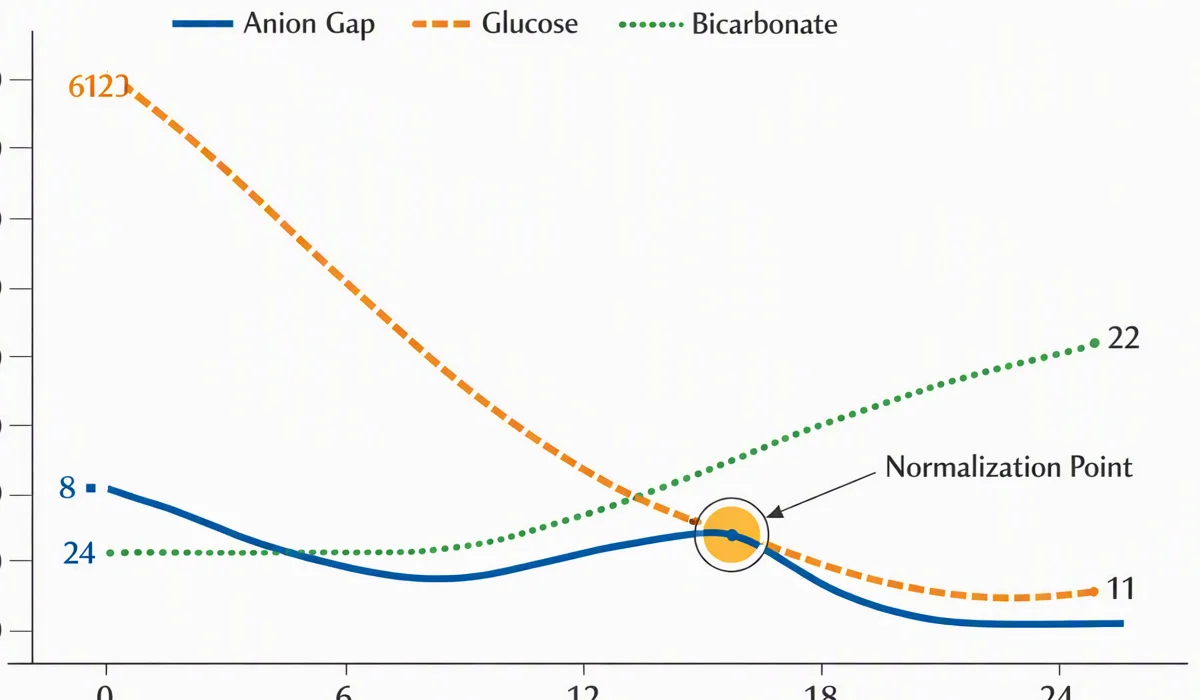
Bicarbonate matters because it is one of the main tools the body uses for buffering. If acid levels rise, bicarbonate combines with hydrogen ions to reduce the fall in pH. If bicarbonate falls too far, the blood becomes more acidic, and that can affect organ function, breathing patterns, and overall acid-base status.
In practice, bicarbonate is not interpreted alone. It is read alongside sodium, chloride, and the anion gap. Together, these values give a more complete picture of whether a patient has a base deficit, acid buildup, or a mixed acid-base picture. This is where the relationship between bicarbonate and the anion gap becomes clinically useful.
How the Anion Gap and Bicarbonate Are Related
The connection between the anion gap and bicarbonate is easiest to understand as a cause-and-effect sequence: when acid is added to the body, bicarbonate is often used up to neutralize it. As bicarbonate falls, the anion gap may go up if the lost bicarbonate is replaced by unmeasured anions from acids.
That is why a low bicarbonate can appear with either a high anion gap or a normal anion gap. The key question is not only whether bicarbonate is low, but also what became of the missing bicarbonate. Was it used up by acid accumulation, or was it lost from the body through the gut or kidneys?
In a high anion gap pattern, bicarbonate is usually reduced because it has been used up while buffering acid. The extra acid contributes unmeasured negative particles, which widen the gap. In this setting, the high gap is a marker of acid accumulation.
On the other hand, if bicarbonate is lost directly, the body may replace it with chloride. That can keep the anion gap normal even though bicarbonate is low. That is why, the relationship is not just “low bicarbonate means high anion gap.” The real answer depends on the underlying cause and the pattern of the other lab values.
Another important concept is metabolic compensation. The lungs may try to reduce carbon dioxide to partially offset a metabolic problem, but compensation does not fix the original issue. It only helps reduce how far pH shifts. So the anion gap and bicarbonate together can reveal whether the problem is due to new acids, base loss, or another form of metabolic derangement.
What Does a Reduced Bicarbonate With a High Anion Gap Mean?
A low bicarbonate level plus a high anion gap usually points to an acid load that the body cannot fully clear. This is a classic pattern of acid-base acidosis caused by additional acids or acid precursors. The bicarbonate falls because it is being consumed while buffering the added acid, and the anion gap rises because of unmeasured anions.
Frequent causes include lactic acidosis, ketoacidosis, kidney failure, and toxin ingestion. Each has a different mechanism, but all can produce a similar lab pattern.
Lactic acidosis occurs when lactate builds up, often because tissues are not getting enough oxygen or are under severe stress. This can happen with sepsis, shock, or other conditions that impair oxygen delivery. Lactate acts as one of the extra acids contributing to the high gap.
Ketoacidosis happens when the body breaks down fat for fuel and produces ketones faster than they can be cleared. This can occur with diabetes, starvation, or alcohol-related illness. Ketones are acidic, so they consume bicarbonate and increase the anion gap.
Kidney failure can also create a high gap because failing kidneys do not clear acids well. As a result, acidic waste products accumulate, worsening the acid-base disorder. This is one reason why rising uremia often changes the serum chemistry in a predictable way.
Toxin ingestion is another major category. Certain toxins create unusual acids or interfere with metabolism, leading to a widened gap and low bicarbonate. In these cases, the anion gap is a critical clue that helps narrow the diagnosis and guide urgent management.
What Does It Mean For a Low Bicarbonate With a Normal Anion Gap Mean?
A reduced bicarbonate with a normal anion gap often indicates that bicarbonate has been removed from the body rather than consumed by a new acid. This pattern is commonly called normal anion gap metabolic acidosis or non-anion-gap metabolic acidosis.
Common causes include diarrhea and renal tubular acidosis. With diarrhea, bicarbonate is removed through the gastrointestinal tract. The body often compensates by retaining chloride, which keeps the anion gap normal even though bicarbonate is low.
In renal tubular acidosis, the kidneys do not process acid or bicarbonate properly. Depending on the type, the kidneys may not excrete enough acid or may waste bicarbonate. This also produces a low bicarbonate pattern without the widened gap seen in high-gap disorders.
The key concept here is bicarbonate loss. Instead of a hidden acid buildup, the body is missing base. That distinction matters because the clinical Find more information workup is different. A normal gap points clinicians toward intestinal losses, kidney tubular problems, or other forms of base wasting rather than acid accumulation.
So, a low bicarbonate does not always mean a high anion gap. It can reflect either extra acids or direct bicarbonate loss. The anion gap helps separate those two paths and makes the interpretation more precise.
How an Anion Gap Calculator Assist in Understanding Results
An anion gap calculator is helpful because it minimizes guesswork and supports standardize the anion gap calculation. By entering the needed lab values, such as sodium, chloride, and bicarbonate, the calculator promptly estimates whether the gap is normal or elevated.
This matters because small changes in the numbers can affect the interpretation. A calculator can also assist with albumin correction, which is important when albumin is low. Since albumin is a major unmeasured anion, a low albumin level can make the anion gap appear falsely normal or only mildly elevated.
Albumin correction enhances diagnostic interpretation by adjusting for the fact that albumin contributes to the expected gap. Without that correction, a patient with significant acid buildup could be missed if albumin is reduced. That is why albumin is not just another lab number; it alters the meaning of the calculation.
Used correctly, an anion gap calculator promotes faster clinical interpretation and better recognition of hidden acid-base problems. It does not replace judgment, but it can highlight whether the pattern fits high-gap acidosis, normal-gap acidosis, or another acid-base disorder entirely.
Think of the calculator as a practical tool that links the raw serum chemistry data to the bigger picture of acid-base balance. It helps identify whether the patient’s bicarbonate loss is likely from acid accumulation, base loss, or a mixed process requiring deeper review.
Typical Causes of Anion Gap Disturbances
Altered anion gap values are often grouped by whether the gap is elevated or within range. The main causes help direct the next stage in workup.
Typical causes of a increased anion gap include:
- Sepsis, which can result in poor tissue oxygenation and lactic acid buildup
- Lactic acidosis, from circulatory collapse, hypoperfusion, or critical illness
- Ketoacidosis, from diabetes, starvation, or alcohol-related acid production
- Kidney failure, with retention of acidic waste products and uremia
- Toxin ingestion, including agents that increase acid load or interfere with metabolism
- Salicylates, which can contribute to complex acid-base disturbances
- Methanol, a toxic alcohol that can produce profound high-gap acidosis
- Uremia, where renal dysfunction causes acid accumulation
These conditions are important because they often lead to both low bicarbonate and a widened gap. Such a finding strongly suggests that the body is dealing with hidden acids rather than simple bicarbonate loss.
Findings with a normal gap more often reflect direct bicarbonate loss or impaired renal handling of acid. In practice, the pattern must be matched with symptoms, history, and the rest of the electrolyte panel. The anion gap is a clue, not a diagnosis.
When to Obtain Medical Evaluation
An unexpected anion gap or bicarbonate level can be a sign of a serious acid-base disorder, especially when it occurs with symptoms or other abnormal lab values. Because these findings may reflect serious illness, they should be reviewed in context rather than ignored.
Symptoms that may warrant prompt attention include rapid breathing, confusion, severe weakness, vomiting, dehydration, chest discomfort, fainting, or worsening fatigue. These may be signs of an active metabolic problem, severe acid-base imbalance, or another urgent condition.
Emergency care may be needed if there is concern for toxin ingestion, severe ketoacidosis, severe lactic acidosis, or kidney failure. In these settings, the abnormal numbers can signal dangerous shifts in blood pH and overall physiology.
A clinician will usually carry out a broader clinical assessment rather than relying on the anion gap alone. That assessment may include repeat serum chemistry, review of medications and exposures, evaluation for infection, kidney function testing, and other targeted studies. The goal is to identify the cause of the acid-base abnormality and determine whether urgent treatment is needed.
In short, the anion gap and bicarbonate are best interpreted together. When either is abnormal, the pattern can reveal whether the body is losing base, accumulating acid, or struggling with another form of metabolic stress. A timely review can make a major difference in identifying the cause and guiding treatment.
FAQ
How does a decrease in bicarbonate affect the anion gap?
A decrease in bicarbonate can raise concern for acidosis, but it does not always change the anion gap in the same way. If bicarbonate is being consumed by acid buildup, the gap often becomes high because of unmeasured anions. If bicarbonate is lost directly, the gap may stay normal. The pattern depends on the underlying acid-base balance.
Can you have low bicarbonate levels with a normal anion gap?
Yes. This is often seen in nongap metabolic acidosis. It frequently occurs with diarrhea or RTA, where bicarbonate is lost rather than replaced by accumulating acids. The chloride level often rises to maintain electroneutrality.
What conditions cause a high anion gap and a low bicarbonate?
Common causes include lactic acidosis, ketoacidosis, kidney failure, toxin ingestion, sepsis, salicylates, methanol, and uremia. These conditions usually involve acid accumulation, which depletes bicarbonate and leaves unmeasured anions behind.
Why is albumin correction important in anion gap calculation?
Albumin is a important unmeasured anion, so low albumin can make the anion gap seem normal when it is not. Albumin correction helps uncover the true degree of acid-base abnormality. This improves diagnostic interpretation and reduces the chance of missing a high anion gap disorder.
When should an abnormal anion gap or bicarbonate be evaluated by a clinician?
An abnormal result should be evaluated when it is persistent, worsening, or accompanied by symptoms such as confusion, rapid breathing, vomiting, dehydration, or severe weakness. Emergency care is especially important if there is concern for toxin exposure, severe ketoacidosis, sepsis, or kidney failure. A clinician can review the lab values in context and assess for an acid-base disorder.